
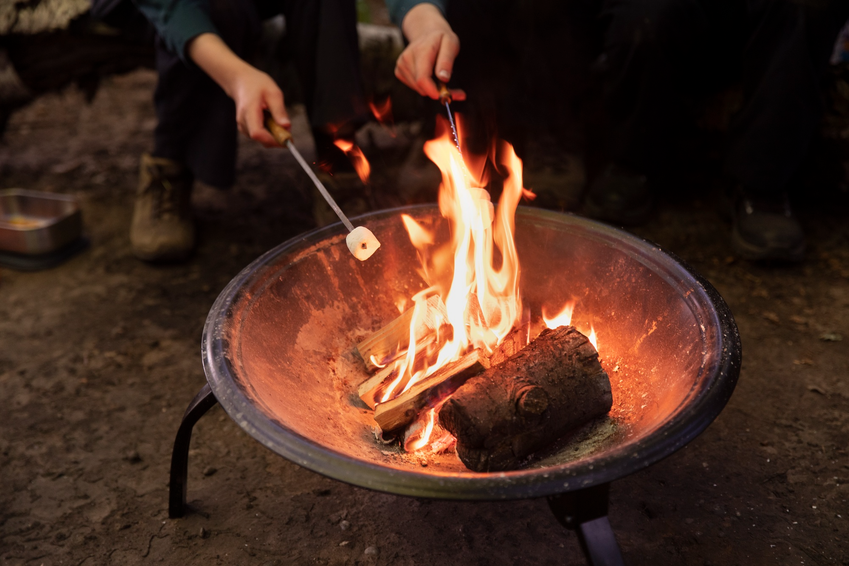
Are you thinking about gathering family or friends around a cozy fire pit? You can absorb the environment freely; however, be careful when dealing with smoke.
Wood smoke can contain millions of tiny particles, which can get deep into your respiratory system when you breathe it in.
Similarly, you should also use the pit with great care so it never damages your skin or causes major damage to your property.
In today’s article, we’ll share important safety tips to follow when using the pits.
Proper Placement and Setup
It’s the first and, no doubt, the most important thing. You need to set the fire pits on a flat, non-flammable surface like concrete or patio pavers (rather than a wooden deck or dry grass). If it sits on a deck, make sure to use a certified mat or heat shield.
Similarly, next, position it under low-hanging tree branches or power lines, as these are easy targets for spontaneous flames.
You need to check the wind as well. Avoid lighting a fire during high winds or dry conditions. Also, pay attention to local no-burn alerts, as authorities already warn people not to burn anything when the wind is strong.
Fuel and Wood Burning
It’s best to use wood that has been kept dry for at least six months. But why? Well, it will reduce the amount of smoke the fire produces. Pressure-treated lumber or wood from construction isn’t safe to burn because it can contain toxic chemicals such as arsenic.
Some people use manufactured logs because they produce less smoke, but that doesn’t make the smoke any safer. They may also contain toxic chemicals and negatively impact your lungs.
Lastly, never use gasoline, kerosene, or lighter fluid to boost the fire, as this could cause dangerous flare-ups.
Supervision and Maintenance
You cannot afford to catch flying embers without any protective shield. Instead, always use a metal spark screen or arrestor to stay safe. Children and pets should always stand at least 3 feet away from the active fire zone.
And stay present until the fire is completely out, as embers can keep burning for hours after you put it out. You can keep a garden hose, bucket of water, or fire extinguisher close by.
When extinguishing the fire, use the drown-stir-drown method. Here, you first douse the coals with water, then mix the ashes with a shovel, and wet them again until they’re completely cold.
Always Buy a High-Quality Fire Pit
Most fire-related incidents occur because the pit isn’t made of durable materials. So, when getting it, look for a minimum steel thickness of 3- 4 mm so the body won’t wrap or burn through after a season or two. Cast iron is great for holding and radiating heat long after the fire dies down (though it is heavy and requires proper care).
Stone and concrete offer heavy-duty weather resistance and are the most preferred options. Lastly, check the stability features. A low-rise, wide-base pit prevents the unit from tipping over in the wind.