
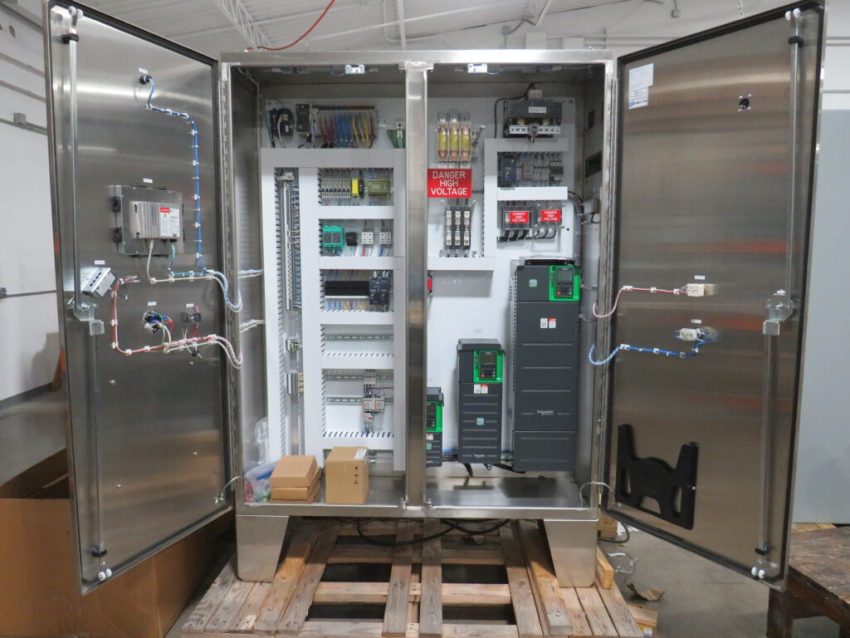
Accurate coordination is essential to modern commercial and industrial activities. Environmental conditions must stay within predetermined bounds, equipment must run at the proper times, and workers must have a useful method of keeping an eye on system activity. Managing each component separately might lead to needless complexity as activities get more complicated. The integration of these many tasks is facilitated by a centralised control system.
This centralised approach is made possible by Control Panels, which are crucial. From a specialised interface, they may enable operators to oversee, coordinate, and manage linked equipment. An adequately designed panel may make day-to-day management more reliable and organised, regardless of whether a process requires temperature regulation, equipment, ventilation, refrigeration, or other regulated systems.
Process Management Centralisation
Maintaining visibility across many operational components is one of the most difficult tasks in process management. Employees may need to examine many places or interfaces when equipment is operated independently in order to comprehend overall performance. Routine monitoring may become more difficult as a result.
Operators can see linked processes more clearly using a centralised control system. It may offer information about operational conditions and enable modifications from a convenient place, depending on its design and use. Establishing uniform protocols for equipment management, starting, and halting may also be facilitated by centralisation.
This methodical approach is particularly useful in settings where several systems must cooperate. Operators may better control the larger process by not considering each component as a separate function.
Encouraging Reliable Operating Conditions
Maintaining steady conditions over extended periods of time is typically necessary for reliability. Productivity may be impacted and sometimes disrupted by unforeseen changes in temperature, equipment performance, or other operational conditions.
Applications where efficient system management and monitoring are crucial might benefit from solutions like Control 30 panels. Maintaining ideal operating conditions may be made simpler by choosing a control system that fits the facility’s needs and gives staff members more insight into critical activities.
When equipment, materials, or products rely on regulated surroundings, consistency is especially crucial. Employees can react to shifting circumstances before they become more significant operational issues thanks to a well-thought-out control arrangement.
Increasing The Effectiveness Of Monitoring
Managing processes effectively involves more than just running machinery. It also entails comprehending the functioning of systems. Operators are better able to spot abnormalities and make wise judgements when they have easy access to pertinent information.
By providing crucial operational data via a centralised interface, control systems may make monitoring easier. Employees may be able to monitor certain circumstances, determine system status, and indicate when attention is needed, depending on the design.
This visibility may lessen the need for frequent manual inspections. Additionally, since anomalous operational behaviour could be identified sooner, it might encourage a more proactive approach to maintenance.
Establishing A Combined Controlled Environment
Many times, factors other than the control equipment itself affect process dependability. Performance may also be impacted by the physical surroundings of a process. Different building components must cooperate in facilities that demand regulated temperatures, sanitary areas, or carefully maintained interior conditions.
Steel Insulated Panels, for instance, may be a component of an insulated building envelope while environmental systems or equipment are controlled by control technology. More consistent operating conditions may be achieved by seeing process control and structural insulation as interconnected components of the whole facility.
When constructing facilities where environmental stability is essential to daily operations, this integrated approach is very helpful.
Enhancing Safety In Operations
Safety is another crucial factor. Industrial systems may include motors, electrical equipment, temperature-sensitive operations, and other elements that need to be managed carefully. Operators may be able to engage with these systems in an organised manner thanks to centralised controls.
Confusion during regular operations may be lessened with clear controls and suitable system structure. Control systems may also include indications, alarms, emergency features, and protective elements that assist staff in identifying unusual circumstances, depending on the design.
However, appropriate design, installation, operation, and maintenance are necessary for dependable performance. The needs of the particular application and pertinent safety regulations should always be taken into consideration when choosing control equipment.
Encouraging Long-Term Process Dependability
Maintaining equipment is just one aspect of reliable process management. It entails developing a system that is responsive, transparent, well-organised, and adaptable to shifting operational requirements.
Businesses can coordinate equipment, keep an eye on critical situations, and react more skilfully when required with the aid of modern control systems. Additionally, they may facilitate operators’ comprehension and management of complicated operations.
Centralised control will remain a crucial component of effective operations as facilities become increasingly automated and networked. Businesses may develop processes that are simpler to manage, more consistent, and better equipped for long-term operating needs by combining appropriate control technology with careful facility design and routine maintenance.