
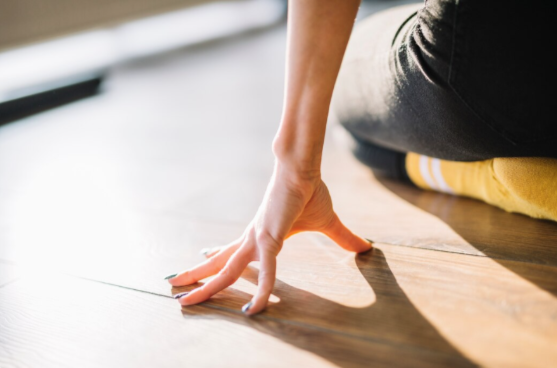
Are you thinking of installing luxury vinyl flooring? It has the style, the durability, and a price that fits your budget. Whether you choose luxury vinyl plank (LVP) to mimic hardwood or luxury vinyl tile (LVT) for a stone-like appearance, it can transform your space.
Understanding the installation process can help you feel confident in your decision and prepare for what to expect on installation day. Here are easy-to-understand steps for the professional installation process.
Step 1: Accurate Measurement and Smart Planning
Before installing anything, the first important step is a thorough assessment of your space. A professional installer will measure your room precisely to calculate the exact amount of material needed. This ensures minimal waste and avoids the headache of running short on materials mid-project.
During this initial visit, the installer also inspects your subfloor. They look for any potential issues like moisture, dips, or high spots that could affect the final result.
Step 2: Preparing the Foundation with Floor Screed and Leveling
A flawless floor starts with a perfect base. Your new luxury vinyl needs a clean, smooth, and completely dry subfloor to ensure it lasts for years without issues. This preparation stage is arguably the most important part of the entire installation.
Depending on what’s currently underfoot, preparation might involve several tasks:
- Removing Old Flooring: If you have old carpet, tile, or other flooring, it will likely need to be removed.
- Cleaning: The subfloor is thoroughly swept and vacuumed to get rid of all dust and debris.
- Leveling: If the subfloor is uneven, a self-leveling compound or a fresh floor screed may be applied to create a perfectly flat surface. This prevents planks from flexing or separating over time.
Taking the time to get this foundation right prevents future problems like bumps, gaps, and uneven wear.
Step 3: Acclimating the Flooring
Luxury vinyl flooring needs time to adjust to the temperature and humidity in your home. For this reason, the material is left to sit for at least 24 to 48 hours. It prevents the flooring from expanding or contracting after installation, which could lead to unsightly gaps or buckling down the road.
Step 4: Choosing the Right Installation Technique
There are three primary methods an installer might use:
- Click-Lock: This method involves planks or tiles that have interlocking edges. They simply click together, requiring no glue or nails.
- Glue-Down: For a more permanent and incredibly stable finish, adhesive is spread directly onto the subfloor. Each plank or tile is then carefully set into the glue. This is a common choice for high-traffic areas or commercial spaces.
- Loose-Lay: This innovative option uses planks with a special backing that grips the subfloor through friction. Adhesive might be used only around the perimeter of the room.
Step 5: Adding the Final Polish
Once all the flooring is in place, it’s time for the finishing touches that complete the professional look. Baseboards and quarter-round molding are reinstalled or added to hide the small expansion gap left around the room’s perimeter. This gap is necessary to allow the floor to expand and contract naturally.